Shining with the Goad of Knowledge and Divine Correction (Krodhakarankusojjvala)
Understanding the goad held in the lower-right hand of Lalita Tripurasundari and its deeper meaning.
published on: Jul 18, 2026
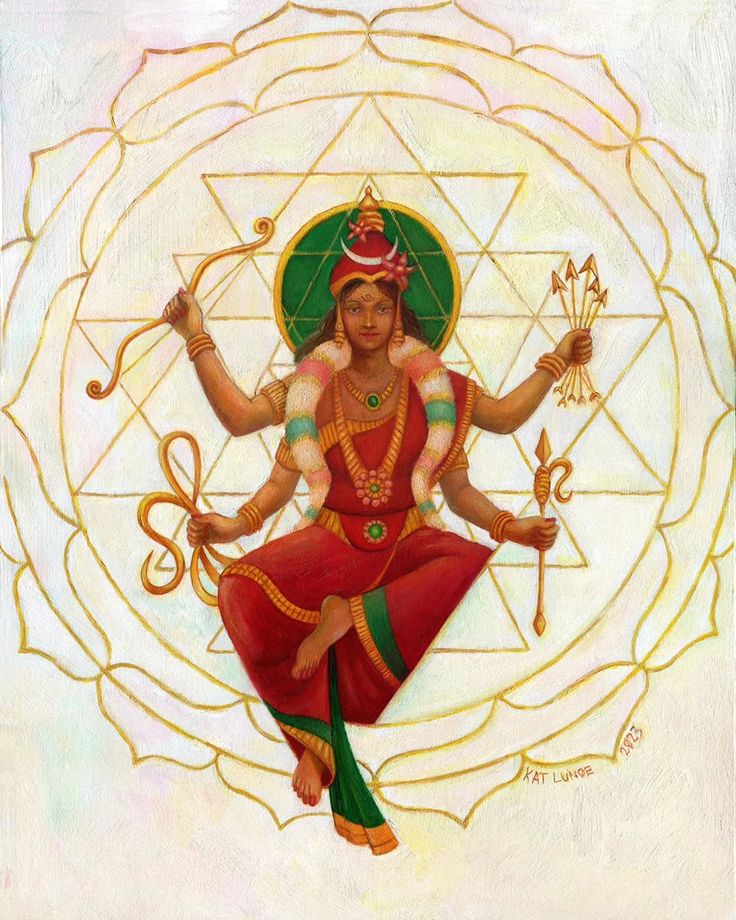
So far, we saw how the Goddess originated from the chit-agni, her four-armed form, and the noose she holds in one of her hands.
Now, we move to the next name that describes another of her weapons: the elephant hook (ankusha).
The name Krodhakarankusojjvala means “She who shines brilliantly with the goad of anger.” At first glance, the association of the Divine Mother with anger may seem unusual. How can anger, which is considered a negative emotion, become a divine attribute?
To understand this, we need to look deeper into the meaning of krodha and the symbolism of the ankusha.
Understanding the Goad (Ankusha)
The ankusha is a sharp tool traditionally used by a mahout (elephant rider) to guide and control an elephant. In the symbolism of Sri Vidya, the goad represents krodha, not ordinary anger, but the force of aversion that turns the mind away from what is harmful.
क्रोधो द्वेषाख्या चित्तवृत्तिः । आकारशब्दादर्शआद्यचि आकारं सविषयकं ज्ञानमित्यर्थः ।
Here, krodha is explained as the mental modification known as dvesha aversion or rejection.
To understand this properly, we need to look at how Indian philosophical traditions describe the functioning of the mind.
In Vedanta, the mind isn’t just an instrument processing data. It is described as something capable of taking the form (akara) of the object it perceives.
When you look at an object, such as an apple, the mind takes the form of that apple through the power of perception. This temporary “apple-shape” your mind takes is what allows us to experience and understand the apple.
Therefore, akara represents the form taken by the mind when knowledge of an object arises.
In the same way, krodha in this context does not mean uncontrolled emotional rage. It refers to the mind taking the form of strong rejection or aversion.
Just as we instinctively pull our hand away from fire because the mind recognizes danger and rejects it, divine krodha is the force that rejects ignorance, falsehood, and spiritual obstacles.
The Divine Nature of Krodha
When we say that the Goddess holds the krodhakarankusha, it does not mean that She possesses anger like ordinary beings.
Her goad represents the sharp, discriminating force of consciousness that cuts away what prevents the seeker from progressing toward truth.
A mahout does not use the goad out of hatred toward the elephant. The purpose of the goad is guidance. A small, sharp touch redirects the elephant when it moves in the wrong direction.
Similarly, the Divine Mother’s goad redirects the wandering mind. It is the power that tells us: “Do not move toward ignorance. Turn back toward the Self.”
Thus, the ankusha represents divine correction, the force of knowledge that removes obstacles and guides the soul toward liberation.
Krodha as Knowledge
Some argue that the word krodha itself implies knowledge. But this is incorrect because it contradicts the Shruti (vedas) which says “Anger is the elephant-hook.” Furthermore the Smriti states the goad must represent anger/aversion as a corrective force which moves us in right way.
तस्मात् द्वेषज्ञानोभयात्मकेनांकुशेनोज्ज्वला शोभमानदक्षाधःकरा ।
“Therefore, She shines with the goad in Her lower right hand, which is of the nature of both aversion and knowledge.”
The goad is not merely anger. It is aversion guided by knowledge, the wisdom that recognizes what must be rejected and what must be pursued.
Scriptural References
The symbolism of the noose and goad is explained in several Sri Vidya texts.
The Purva Chatushati states:
पाशांकुशौ तदीयौ तु रागद्वेषात्मकौ स्मृतौ ।
“Her noose and goad are remembered to be of the nature of attachment and aversion.”
The noose (pasha) represents raga, attraction or attachment, while the goad (ankusha) represents dvesha, aversion.
The Tantraraja, in the Vasana chapter, further explains:
मनोभवेदिक्षु धनुः पाशो राग उदीरितः ।
द्वेषः स्यादंकुशः पञ्चतन्मात्रा पुष्पसायका ॥
“The mind is the sugarcane bow, attachment is the noose, aversion is the goad, and the five subtle elements are the flower arrows.”
Here, each weapon of the Goddess is mapped to a deeper principle within the human mind.
The Goddess does not merely hold physical weapons; She holds the very forces that govern our inner life.
The Goad as Jnana Shakti
Another interpretation from the Uttara Chatushati connects the weapons with the three powers of the Supreme Goddess:
इच्छाशक्तिमयं पाशमंकुशं ज्ञानरूपिणम् ।
क्रियाशक्तिमये बाणधनुषी दधदुज्ज्वलम् ॥
“She shines holding the noose made of the Power of Will (Iccha Shakti), the goad made of the Power of Knowledge (Jnana Shakti), and the bow and arrows made of the Power of Action (Kriya Shakti).”
According to this understanding:
- The noose represents Iccha Shakti, the power of divine will.
- The goad represents Jnana Shakti, the power of divine knowledge.
- The bow and arrows represent Kriya Shakti, the power of divine action.
The goad therefore becomes a symbol of wisdom itself, the knowledge that pushes us away from ignorance and toward the realization of the Supreme Truth.
Conclusion
A wild elephant is guided by a mahout using the sharp touch of a goad. In the same way, the restless human mind, wandering among countless desires and distractions (Maya), is guided by the Divine Mother’s goad.
The krodha here is not worldly anger. It is the divine force that rejects ignorance, destroys inner obstacles, and directs the seeker toward liberation.
The Goddess shines with this goad because She alone possesses the wisdom to correct, guide, and transform the mind.
क्रोधाकाराङ्कुशोज्ज्वलायै नमः ।
Salutations to Her who shines brilliantly with the goad (ankusha) of divine correction and knowledge.