Bright as thousands of rising suns (Udyadbhanusahasrabha)
Understanding the Goddess's Vimarsha form, Her radiant redness, and the three ways to visualize the Divine.
published on: Jul 12, 2026
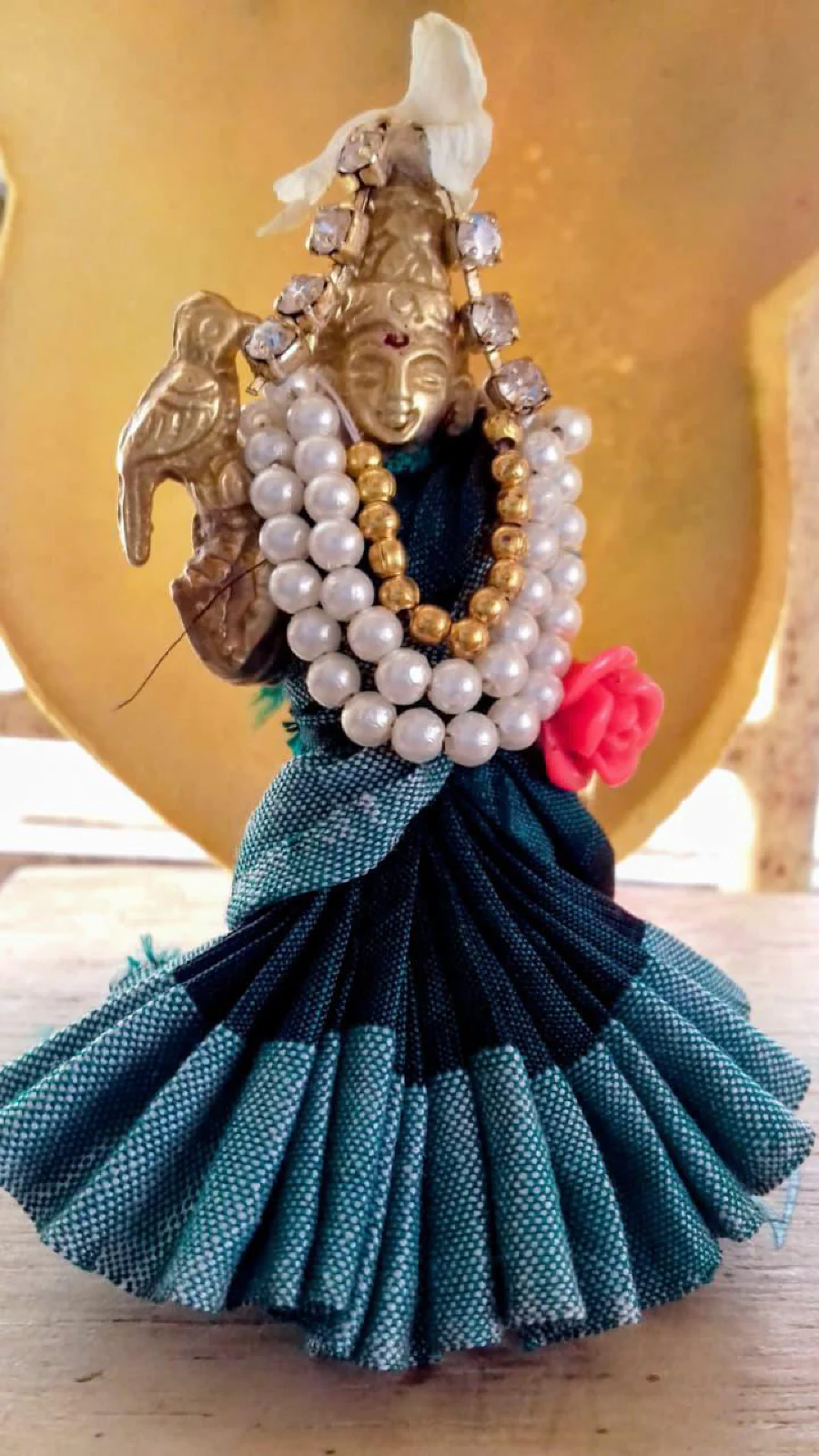
As seen so far, we have explored the eternal form of the Devi and Her nature as Prakasha (pure illumination/consciousness). Beginning with the sixth name, the text shifts to describe Her Vimarsha (reflective self-awareness) form.
The name, Udyad-bhanu-sahasrabha, means “She who is as bright as a thousand rising suns”.
Her Radiant Brilliance
As we learned from the name Chidagnikunda sambhuta, when the Goddess first emerged from the fire-pit of consciousness, She was as bright as millions of suns and as cool and soothing as millions of moons. Here, the name emphasizes this brilliance. The word “rising” (udyat) is used as an adjective to specifically describe Her radiant color.
Her Crimson Redness
भानूनां किरणानां सहस्रं यस्य स भानुसहस्रः सूर्यः ।
Alternatively, the Sun (Surya) is called Bhanu-sahasra, meaning the one who has a thousand (sahasra) rays (bhanu). The term “rising” is applied to highlight the deep, vibrant red hue characteristic of the dawn.
Through both interpretations, we understand that Lalita Devi possesses a brilliantly red complexion.
स्वात्मैव देवता प्रोक्ता ललिता विश्वविग्रहा। लौहित्यं तद्विमर्शः स्यादुपास्तिरिति भावन |
This significance is stated in the Svatantra Tantra: “The Goddess Lalita, whose body is the entire universe, is proclaimed to be one’s own Self. Her red color is that Vimarsha (Self-awareness), and true worship is this meditation.”
स्वयंहि त्रिपुरादेवी लौहित्यं तद्विमर्शनम |
Similarly, the Vamakeshvara Tantra states: “Goddess Tripura is the Self indeed, and Her redness is Her Vimarsha.”
How Should We Visualize the Divine?
According to the revered commentator Bhaskararaya, the Goddess, having attained the perfect, harmonious union (Samarasya) of Illumination (Prakasha) and Reflection (Vimarsha), possesses three distinct forms: Physical (Sthula), Subtle (Sukshma), and Supreme (Para).
करचरणादिविशिष्टं स्थूलं। मन्त्रमयं सूक्ष्मं। वासनामयं परं।
- Sthula (Physical): The anthropomorphic form endowed with a face, hands, feet, weapons, etc. This form is designed for beginners to focus and anchor their minds during worship.
- Sukshma (Subtle): The form as sound or vibration—specifically, the Mantra (such as the Panchadashi or Sri Vidya mantra). In this state, the deity is the sound.
- Para (Supreme): The formless, mental, or purely experiential state (Vasana), where the worshipper realizes the Goddess is identical to their own deepest Self.
सामान्यं परमं चेति द्वे रूपे विद्धि मेऽनघ । पाण्यादियुक्तं सामान्यं यत्तु मूढा उपासते । परं रूपमनाद्यन्तं यन्ममैकमनामयम् । ब्रह्मात्मा परमात्मादिशब्देनैतदुदीर्यत
This was also stated by the Lord in the Yoga Vasistha: “O sinless one, know My two forms to be the general (Samanya) and the supreme (Parama). The general form, endowed with hands and feet, is what the ignorant worship. My supreme form is without beginning or end, and is My unique, untainted essence. It is designated by terms like Brahman, Self, Supreme Soul, etc.”
Conclusion
While the Goddess can be realized in these three forms, starting from this name, the Sahasranama begins to detail the Sthula (physical) form of Bhagavathi Lalita Devi—a form that is as brilliantly radiant as thousands of suns and stunningly red in complexion.
उद्यद्भानुसहस्राभायै नमः
Salutations to Her who possesses the radiance of a thousand rising suns.