Manifested herself for fulfilling the tasks of the Devas (Devakaryasamudyata)
Let's understand the purpose of her manifestation as described in the fifth name
published on: Jul 10, 2026
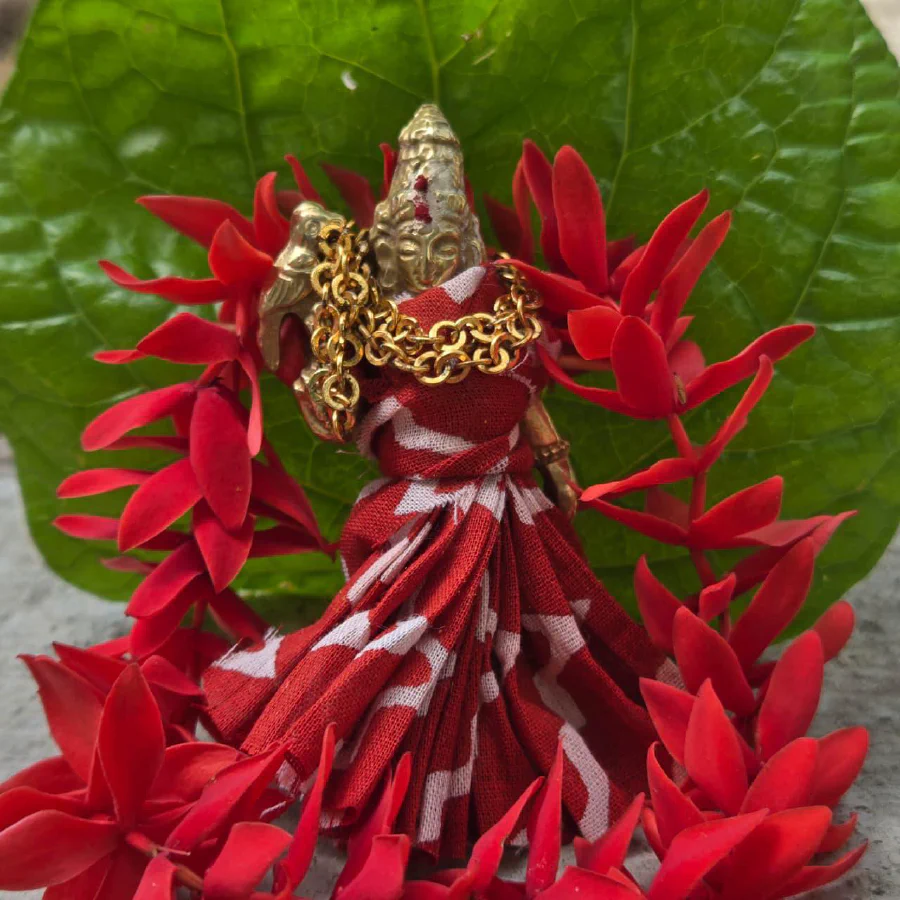
Goddess Lalitha Tripura Sundari manifested Herself from the chidagni-kunda (the fire of pure consciousness), as seen in the previous post. The specific purpose of Her manifestation is revealed in this fifth name: Devakaryasamudyata.
How Can the Eternal be “Born”?
If the Goddess is Nitya (Eternal and without beginning), how can she have a birth (utpatti)?
She is never literally “created”. Instead, she manifests herself. When the universe falls into chaos and the gods (Devas) are defeated by demons, they pray to Her. She simply takes on a visible form to accomplish a specific mission. In this case, the slaying of powerful demons like Bhandasura and Mahishasura.
Therefore, the literal meaning of this name is that She manifested Herself for the tasks of the gods:
- Devakarya: “The tasks of the gods”. These tasks refer to the destruction of demonic forces.
- Samudyata: “Fully manifested or arisen”. The prefix sam implies She manifested completely (sampurna) with all Her divine kalās (attributes and powers).
The Cosmic Tasks of Parabrahman
The word Deva in its singular form refers to the Supreme Reality, Parabrahman. Thus, a deeper meaning emerges: She manifested to execute the cosmic tasks of Parabrahman. As discussed in our previous posts, these tasks are:
- Creation: (Sri Mata)
- Preservation: (Sri Maharajni)
- Destruction: (Srimat Simhasanesvari)
Scriptural Evidence of Her Manifestation
The Markandeya Purana beautifully explains this apparent paradox of the Eternal Mother being born:
देवानां कार्यसियर्थमाविर्भवति सा यदा ।
उत्पन्नेति तदा लोके सा नित्याप्यभिधीयते ||
Whenever She manifests for the purpose of accomplishing the tasks of the gods, then, even though She is eternal (Nitya), She is spoken of in the world as ‘born’.
In the Markandeya Purana, She manifests to slay Mahishasura and other demons, while in the Brahmanda Purana, She manifests specifically to slay Bhandasura.
The Goddess Herself affirms this intentional manifestation to King Himavan (as Parvati) in the Kurma Purana:
अहं वै याचिता देवैः संस्मृता कार्यगौरवात् ।
विनिन्द्य दक्ष पितरं महेवरनिनिन्दकम् ।
धर्मसंस्थापनार्थाय तवाराधनकारणात् ।
मेनादेहात्समुत्पना त्वामेव पितरं धिते’लयादि ॥ ५२ ॥
In Her previous life, She was Sati, the daughter of the arrogant King Daksha. When Daksha insulted Her husband, Shiva (Maheshvara), She abandoned that body in disgust.
Because the gods desperately needed Her to restore cosmic order (Dharma), and because King Himavan had worshipped Her with intense devotion, She chose to manifest in a new body through Himavan’s wife, Mena, accepting him alone as Her father.
Conclusion
These scriptural stories and interpretations clearly show that the Goddess is eternal. Her “birth” is never an ordinary biological event, but a calculated, deliberate manifestation to fulfill a divine purpose and restore balance to the universe.
देवकार्यसमुद्यतायै नमः
I offer my salutations to the Divine Mother who manifested Herself for fulfilling the tasks of the gods.