The Liberation Gajendra Wanted
Let's explore the true meaning behind the Gajendra Moksham story from the Bhagavatam.
published on: Jun 24, 2026
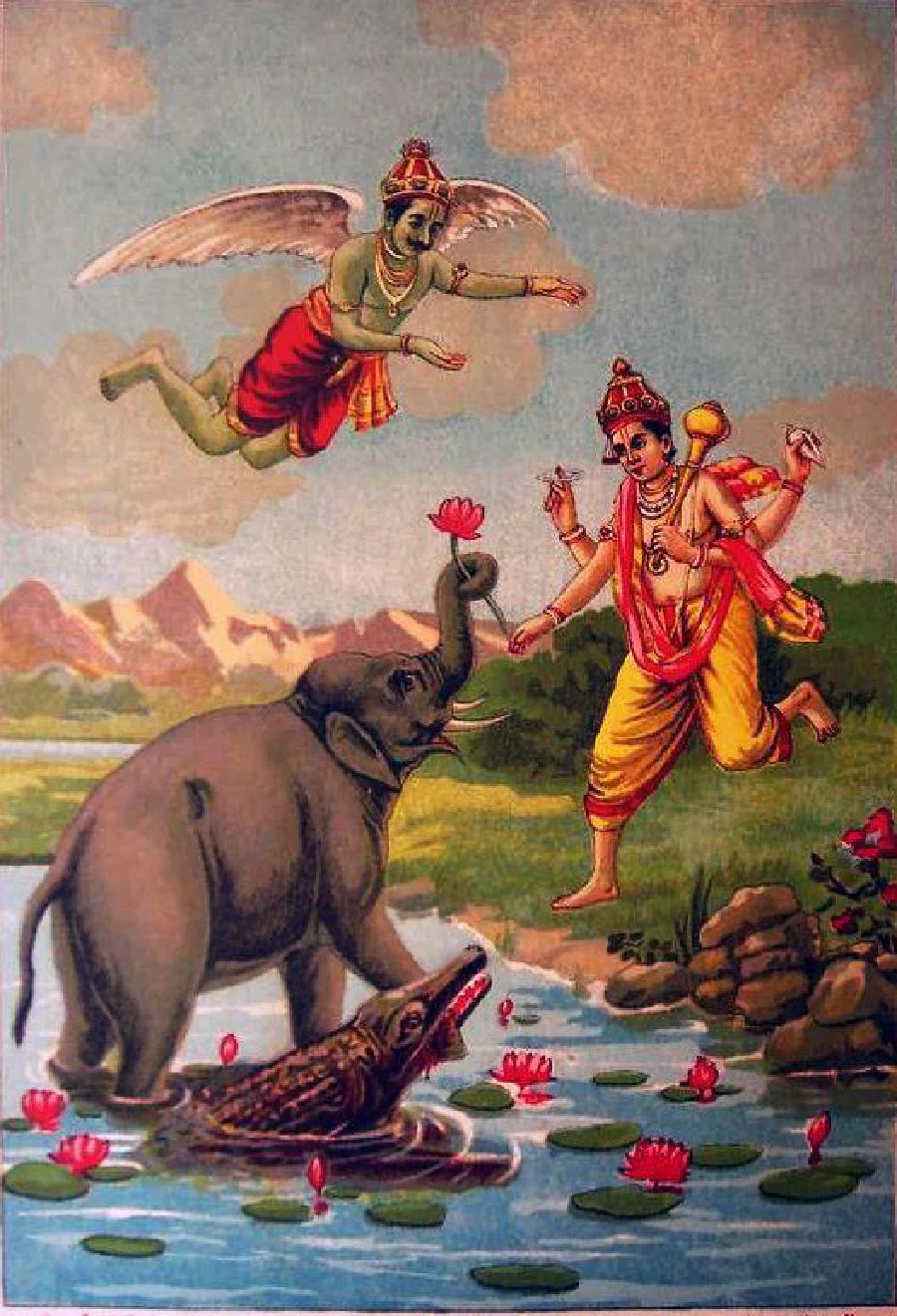
If you grew up in India, you’ve probably heard the story of Gajendra Moksham. The usual takeaway goes something like this: a giant crocodile grabs an elephant, the elephant cries out to God, and Lord Vishnu rushes down to save him. It’s a beautiful story of divine rescue.
But there’s a fascinating detail we often miss: Gajendra never actually asked God to save him from dying.
So, what did he ask for? Let’s take a closer look.
The Story We Know
To set the scene, Gajendra, a majestic king of elephants, wanders into a clear and beautiful, lotus-filled lake with his massive herd to beat the brutal summer heat. They didn’t just drink the water; they began to play, churning up the mud and completely destroying the lake’s quite beauty.
All that noise wakes up a powerful crocodile. It attacks, clamping its jaws right onto Gajendra’s foot, and a brutal tug-of-war begins. Gajendra’s herd didn’t try to help, but they retreat to the shore leaving him suffering.
Abandoned and staring death in the face, Gajendra has a moment of pure clarity. He realizes that nothing in this physical world lasts, and he completely surrenders to the divine. Lord Vishnu appears, defeats the crocodile with his Sudarshana Chakra, and with a simple touch, grants Gajendra liberation.
What Gajendra Actually Wished For
Here is where the story gets really profound. The stotram (prayer) Gajendra did in his final moments was breathtaking, capturing the core essence of the Vedas and Upanishads. Thanks to the good karma accumulated over his past lives, he was able to fix his mind on the Divine during his most dire crisis. He doesn’t call God by a specific name, he just tunes into the Paramatma (the Supreme Soul) within himself and lets go.
This specific shloka from the Bhagavatam tells us exactly what was on his mind:
जिजीविषे नाहमिहामुया किम्
अन्तर्बहिश्चावृतयेभयोन्या ।
इच्छामि कालेन न यस्य विप्लवस-
तस्यात्मलोकावरणस्य मोक्षम् ॥
Oh God, I am not asking You to save my life in this material world. What is the use of continuing in this elephant body, which is wrapped inside and out by ignorance and fear? I simply desire eternal liberation from this illusion. Lift the veil of ignorance so I may realize the true soul — the one thing time cannot destroy.
He wasn’t begging, “Please get this crocodile off my leg!” Instead, he was asking for the ultimate release: to wipe away his ignorance, realize his true self, and merge with the Eternal Being.
Conclusion
Gajendra’s struggle is a lot like our own. We get caught in the jaws of time and materialism, often relying on temporary comforts and relationships that eventually can’t save us. The next time you find yourself bowing your head in prayer, think of Gajendra’s wisdom. Instead of just asking for a quick fix to a worldly problem, try asking for a little bit of that ultimate clarity and liberation.