Pranava Swaroopam - Panchakshari
Let's see how the five letters of the Panchakshari mantra are the origin of all words.
published on: Jun 20, 2026
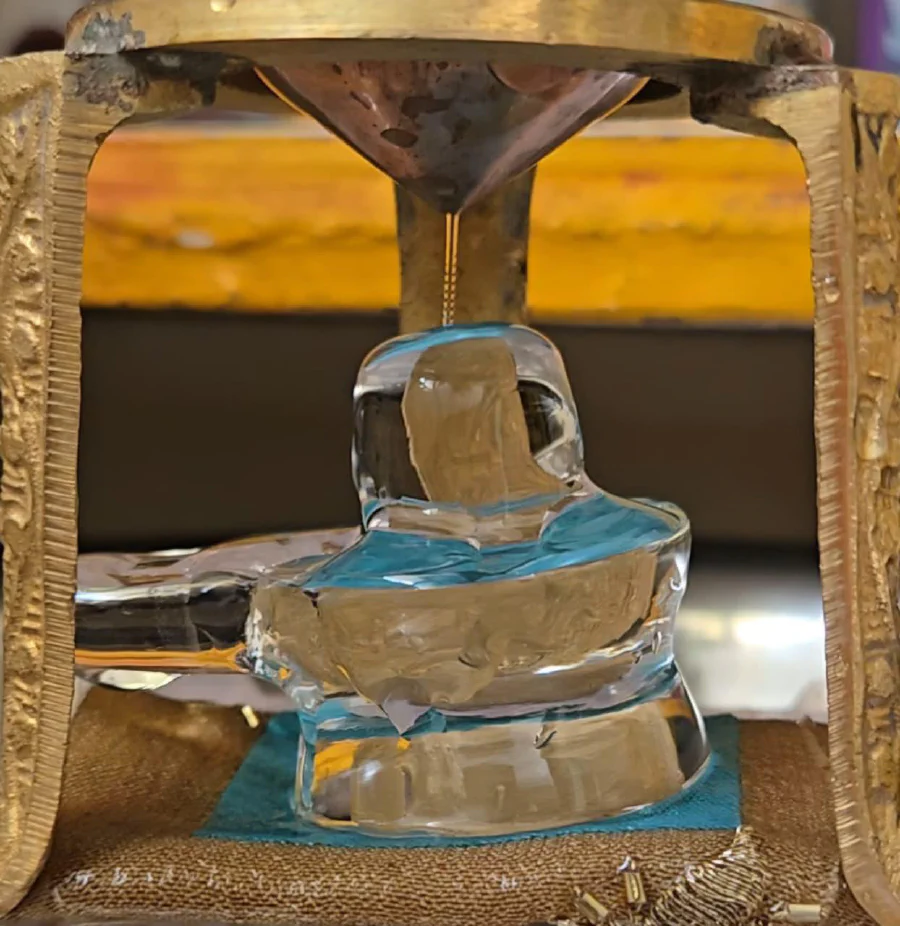
The Panchakshari is one of the most renowned mantras in the world, yet its profound depth is often overlooked. In this post, we will explore the immense greatness of the Panchakshari mantra and its divine origin.
Origin of the Panchakshari
Continuing the story of how Shiva first took physical form before Brahma and Vishnu at the dawn of creation (as seen in this post), we find the origin of this powerful mantra.
After severing Lord Brahma’s ego-filled fifth head, Lord Shiva, in his Pancha Brahma Swaroopam (five-faced form), listened to Brahma’s heartfelt prayers. In response, Shiva uttered one sacred syllable from each of his five faces: ‘Na’, ‘Ma’, ‘Shi’, ‘Va’, ‘Ya’. He bestowed this mantra upon Lord Brahma to aid him in the grand task of creation.
This marks the true origin of the mantra. It is the expanded form of ‘OM’, the primordial sound of the universe. The Omkara consists of five subtle elements: ‘Aa’, ‘Uu’, ‘Ma’, ‘Bindu’, and ‘Nadam’ (sound). When condensed, the supreme truth is ‘Om’; when expanded, it becomes the Panchakshari. Thus, Lord Shiva himself gifted this mantra to Brahma, and through him, to humanity. It was not invented by any mortal mind. It is the very embodiment of the primordial sound itself.
Rishi of the Panchakshari
Every mantra has a Rishi, the one who first realized or uttered the mantra. It is widely believed that the Vamadeva, the guru form of Lord Shiva himself is the Rishi of the Panchakshari. However, some texts cite Lord Brahma as the Rishi, as he was the first recipient of the mantra who then propagated it to the world.
Regardless of the designated Rishi, we must understand the absolute supremacy of this five-lettered word. It is the absolute origin of all the Vedas; every subsequent mantra and word in existence flows from this divine source.
Regardless of the designated Rishi, we need to realize how powerful this five-letter mantra is. It is the absolute source of the Vedas, and every other mantra came after it.
Meaning of the Panchakshari
नमः शिवाय
At a literal level, the translation is simple: “Salutations to Lord Shiva.”
However, looking deeper into the philosophy, we begin to understand the true essence of “Shiva.” Shiva is not merely a physical deity, but supreme consciousness itself. The true form of Shiva is Satyam (truth), Jnanam (knowledge), and Parama Anandam (ultimate bliss). Therefore, the deeper meaning becomes a salutation to the One who is the embodiment of truth, knowledge, and supreme bliss.
Namah conventionally means salutations. Ordinarily, when we salute someone, it implies duality; a separation between them and us. But the continuous chanting (japam) of this mantra removes the distance, moving us closer to the divine. Saying Namah Shivaya is an act of deep surrender (letting go oneself). It is a plea for Shiva to destroy the veil of Maya (illusion). The word Namah defines our relationship with the divine. It reminds us that we belong fully to the divine. This deep sense of belonging ultimately grants us great spiritual strength.
If we meditate sincerely on this mantra, we draw ever closer to Shiva. Once his grace severs the illusion of Maya, we will realize that we are not separate from that divine essence. Ultimately, we will attain a state of consciousness where we can truly say, “Shivoham” — I am Shiva.
Conclusion
So, the next time you hear or chant Namah Shivaya, do not think of it as merely another way to offer salutations to the divine. Remember its profound meaning: it is a sacred invocation that dissolves all separation, drawing us ever closer until we become one with Shiva.