Ganapathi Tatvam | A Small Peek
Talking about Ganapathi in my first post, hoping he will help with my discipline.
published on: Jun 16, 2026
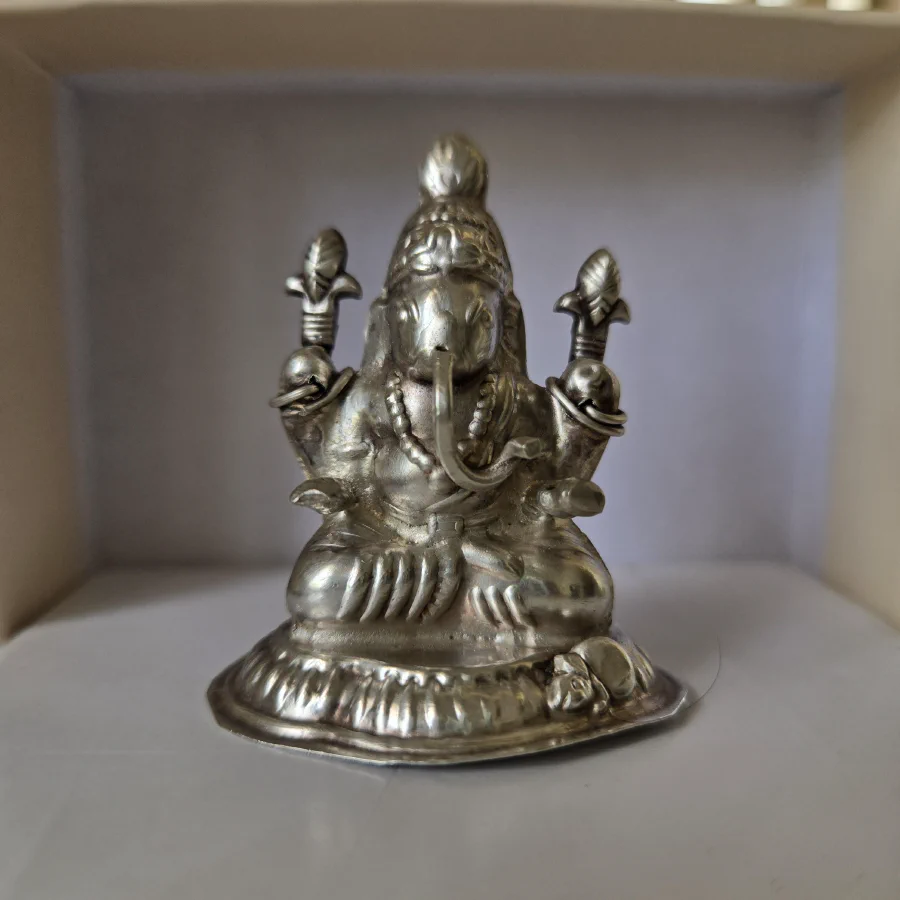
Hello! as this is the first post in my notes, I have decided to talk about Ganapathi. He is the first deity we worship in all our spiritual practices. We believe he is the master of obstacles, and we seek his blessings to clear the hurdles from our paths. Anyone who hears the name Ganesha immediately pictures the elephant-headed god, the son of Lord Shiva and Goddess Parvati. But in this article, let’s dive a little deeper into the Ganapathi Tatvam, his true essence beyond his physical form.
The Lord of Ganas and Parabrahma
The word Ganapathi or Ganesha means the Lord of the Ganas (multitudes or all beings). He is the supreme lord of many. We can understand him as the Parabrahma,the ultimate reality that is one, yet pervades all beings in the world. Therefore, Ganapathi is the divine link between the ganas (all of creation) and the Parabrahma. Furthermore, the form of Ganapathi is not limited to the elephant-headed deity; he is also invoked in a simple mound of turmeric. This signifies his Parabrahma tatva: he is the ultimate truth, even without a specific form.
The Manifestation of Pranava (ॐ)
Another beautiful name for Ganapathi is Vighneshwara, the Lord and controller of obstacles. The Puranas feature a story that explains his earliest presence. Before the creation of the universe, Brahma Deva meditated on the Pranava (the sound OM) to ensure his process of creation would be free of hurdles. Through this meditation, the immense power of OM manifested before Brahma in a physical form, a deity with an elephant head and a human body. Thus, Ganapathi is the very personification of OM itself. This divine form then bestowed the Vakratunda mantra upon Brahma.
वक्रतुण्ड महाकाय सूर्यकोटि समप्रभ |
निर्विघ्नं कुरु मे देव सर्वकार्येषु सर्वदा ||
translation
Oh god! with the curved trunk and immense presence (huge body), brilliant as ten million suns. Please, look upon my journey and keep all my actions free of obstacles, always.
If we look at the word, Vakratuṇḍa. It translates to the “god with a curved trunk.” However, this only describes Ganesha’s outer appearance. If we dive deep into this single name, we unlock profound meanings about the Ganapathi tatvam. Vakra also means “crooked.” The crookedness in our life’s path is caused by worldly obstacles, and he is the one who straightens or removes these detours. Another interpretation of Vakra is illusion (Maya). Ganesha is the destroyer of illusions, helping us attain great heights in our spiritual sadhana (practice).
Beyond Shiva and Parvati
All these cosmic milestones occurred long before the divine marriage of Shiva and Parvati. In fact, various Puranic narratives recount that they performed Ganapathi Puja prior to the Shiva-Parvati Kalyanam itself. Similarly, during the Tripurasura Samharam, Lord Shiva meditated upon Ganapathi to invoke the obstacle-removing energy required to vanquish the asuras. Therefore, we should not limit our understanding of Ganapathi to just being their son. Rather, he is the primordial manifestation of the Omkara that existed before the universe itself.
We can comprehend the Ganapathi tatvam in profound detail by studying the Ganapathi Atharvashirsha. This Vedic text explicitly describes Ganapathi as the Parabrahma, which we can look into later. While there are numerous later stories in various Puranas about his physical manifestations, we must never forget that his core essence is the Parabrahma tatva.
Conclusion
So, we can conclude saying that Ganapathi is not merely an elephant-headed deity; he is the physical manifestation of the primordial sound OM, encompassing both Prakriti (Parvati) and Purusha (Shiva). The next time you worship Maha Ganapathi, remember him not just as the remover of obstacles, but as the supreme Parabrahma tatva.